
Gold repatriation describes bringing gold back to a home location under a particular programme or arrangement. It should not automatically be interpreted as a new purchase, because location and the total amount owned are different dimensions.
Repatriation generally refers to moving gold back to a country's domestic custody. The transfer can change where reserves are stored while leaving the total quantity owned unchanged.
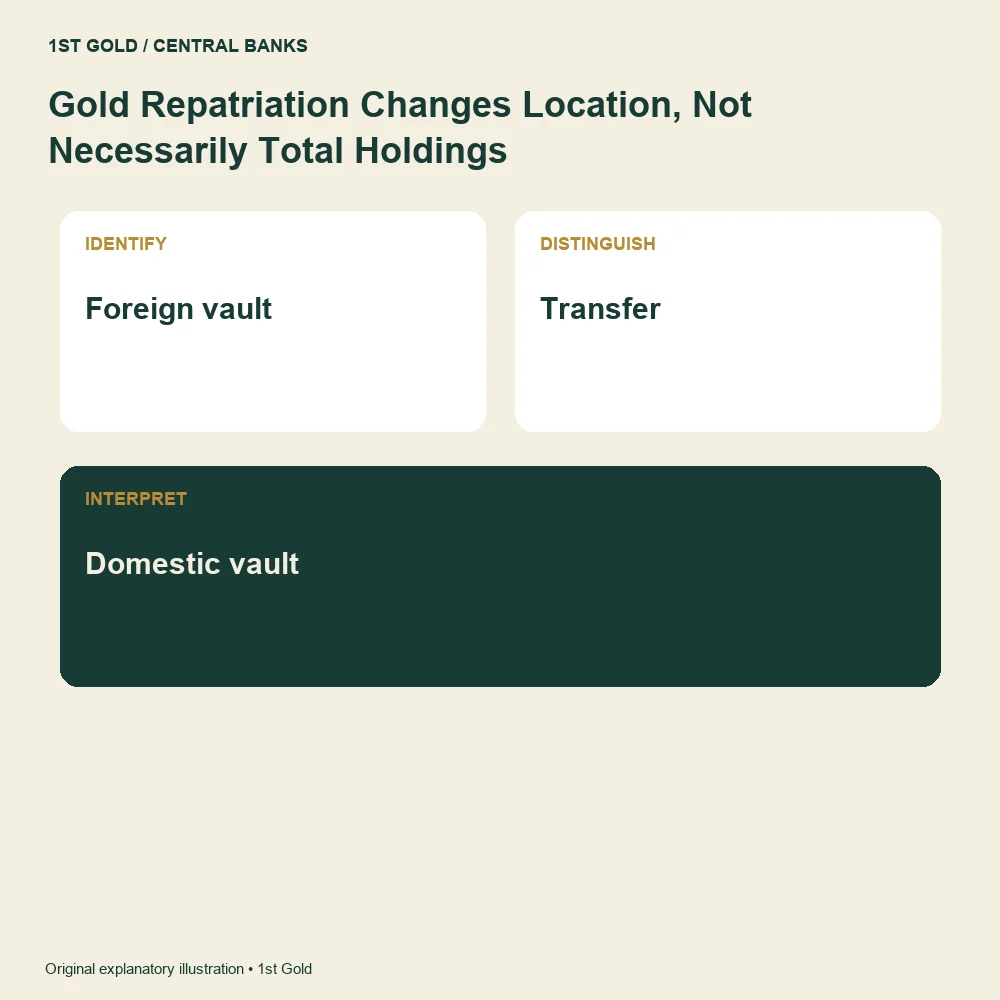
Identify the announcement
Distinguish a plan, an amount already transported and a completed programme. Check whether the statement concerns ownership, location or both. A headline about bars arriving at a domestic vault should not automatically be added to a tally of new gold purchases.
Ask operational questions
Relevant considerations can include access to markets, custody arrangements, verification and logistics. The institution's own explanation is the best starting point for its stated rationale. Avoid assigning a political motive solely from the physical move. Keep quantity, location and valuation as separate fields when building a timeline. That simple structure makes it easier to compare the announcement with later reports and prevents the same gold from being counted once as an existing reserve and again as a new acquisition.
Reading a gold repatriation announcement
Identify whether the announcement describes a plan, a shipment already completed or the end of a multi-stage programme. Record the quantity and its unit, the relevant dates and the stated destination. If a headline gives a cumulative total, avoid adding it to earlier cumulative announcements as though each represented a separate new movement.
Compare the announcement with the institution's reported overall holdings for the corresponding period. Keep any stated policy explanation separate from speculation about motives. A transfer can be operationally significant without increasing the amount of gold owned. Conversely, a change in total holdings would require its own explanation. A clear account tells the reader what physically moved, what ownership figure is reported and which parts of the story remain outside the available evidence.