
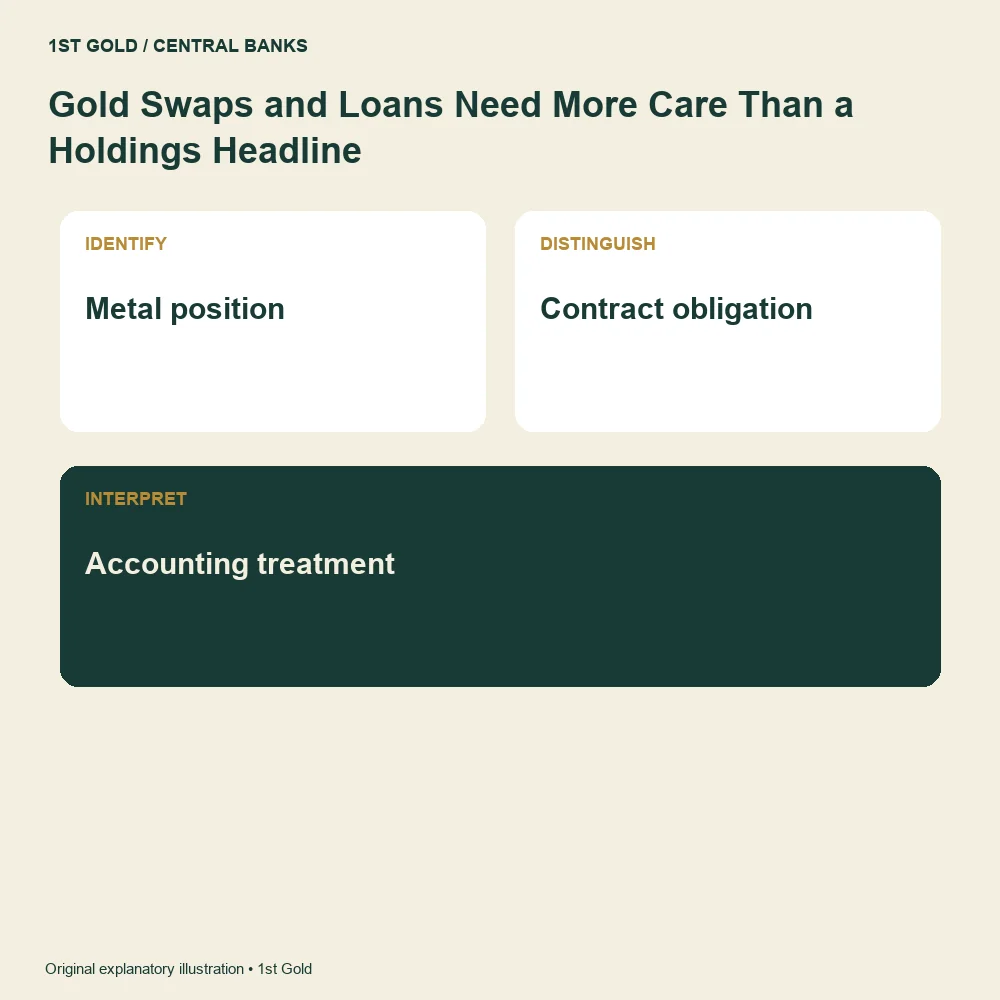
Gold swaps and loans can make reserve disclosures harder to interpret than a simple list of purchases and sales. Read the institution's definitions and accounting notes before inferring what a reported quantity or value says about a transaction.
Gold-related transactions can involve lending, borrowing or swaps rather than a straightforward purchase or sale. These arrangements create contractual rights and obligations that a simple physical-holdings figure may not fully explain.
Read the notes
An institution's financial statements and reserve-reporting methodology may describe how these transactions are recorded. The treatment depends on the arrangement and reporting framework. Do not assume that every change in a reported line item corresponds to bars entering or leaving a vault.
Avoid unsupported reconstruction
Public data may not disclose all transaction-level details. If the evidence is insufficient to distinguish an outright sale from another operation, state that limit rather than inventing a trade history. Compare like measures over time and note accounting changes. A useful analysis separates the amount reported, the institution's explanation and any inference made by the writer. That keeps a technical accounting issue from becoming an exaggerated claim about hidden buying or selling.
Questions about gold swaps and loans
Start by identifying the measure in the table: is it a physical quantity, a balance-sheet value or another disclosed category? Then read any note that explains how relevant transactions are presented. Do not assume that two institutions use identical reporting language or that a change in one line item reveals every contractual detail behind it.
Write a summary in three parts: the figure explicitly reported, the explanation supplied by the institution and any remaining uncertainty. If you calculate a change, retain the original units and dates. If the disclosure does not establish a specific sale, loan or counterparty, do not present one as fact. This disciplined approach makes a technical report more understandable while respecting the limits of the information it actually provides.