
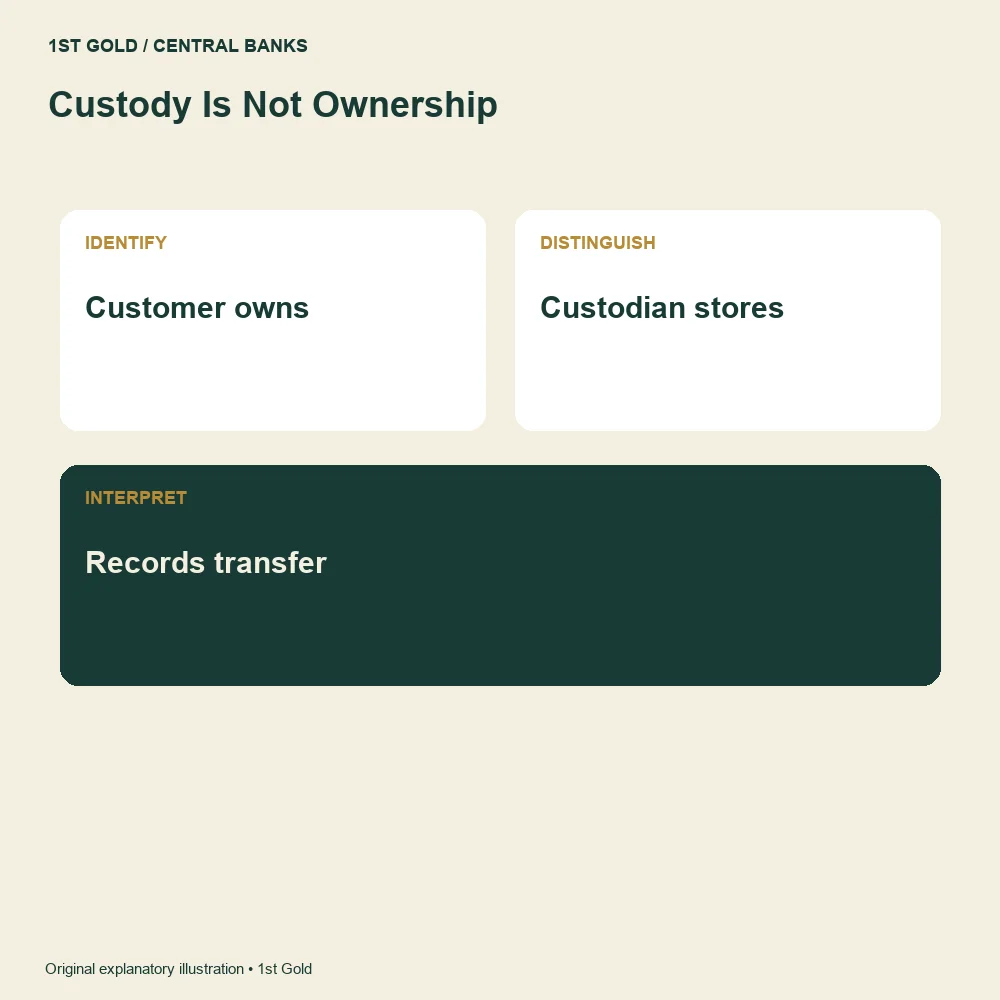
A central bank can store gold for other institutions without owning that gold. The Bank of England explains that it provides custody for the UK's reserves and for other customers, including central banks.
Keep balance sheets separate
The location of a bar does not by itself identify its owner. Under an allocated custody arrangement, specific bars can remain the customer's property. A photograph of a national vault therefore cannot be used as a direct measurement of the host institution's own gold holdings.
Follow the reported capacity
When reading a figure, ask whether it refers to gold owned, gold stored for customers or a wider national reserve measure. These categories can differ substantially. The Bank's explanation also notes that ownership can change through records without the bars physically moving. This helps explain why custody location and trading activity are separate concepts. Good reporting names the owner or customer category, the custodian and the relevant date instead of combining them under the vague phrase “the bank's gold”.
Source and further reading
Bank of England: Gold custody and ownership. Reference checked on 14 November 2026. The linked source supports the relevant definitions or background; illustrative calculations above are our own.