
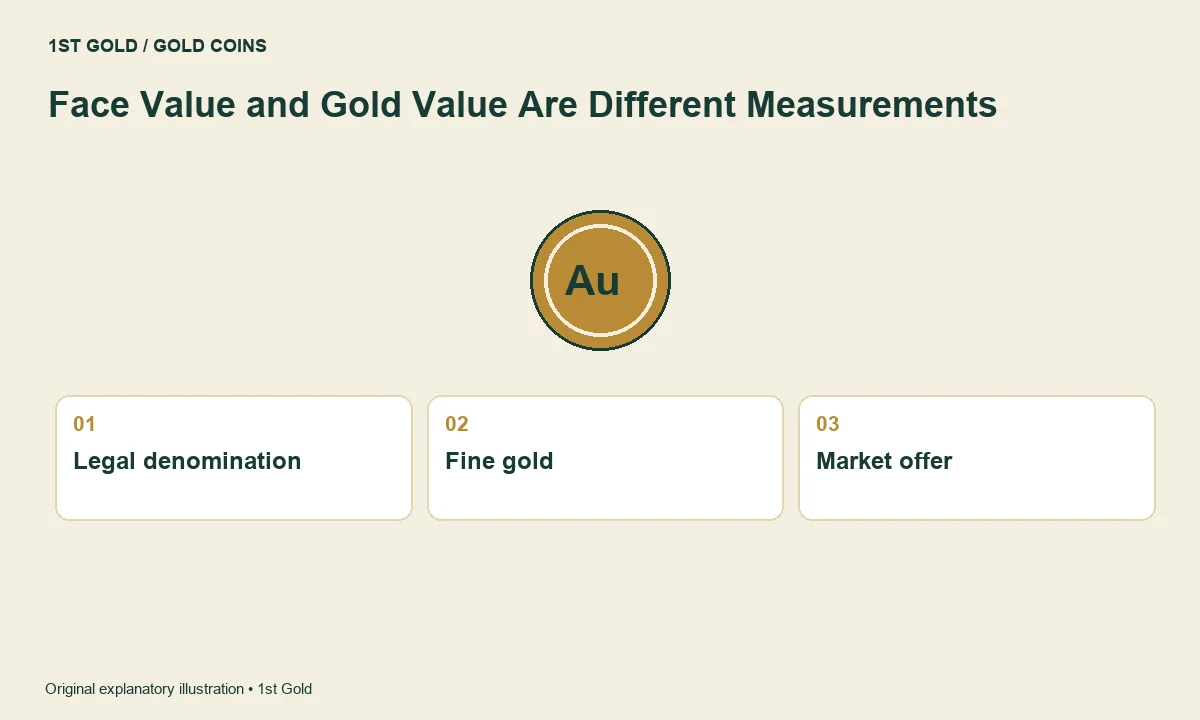
Many gold coins display a currency denomination that differs substantially from their market price. The face value identifies the coin's monetary denomination; it is not a dealer's promise to buy or sell at the value of the gold inside.
Use the correct reference
To compare bullion products, establish the fine-gold content and the actual market quotation. To understand legal-tender status, consult the issuing jurisdiction's rules. Do not infer tax treatment or payment acceptance from the presence of a denomination alone.
Avoid a misleading percentage
A claim that a gold coin sells for many times its face value can sound dramatic while saying little about its retail premium. The useful comparison is with a dated fine-gold reference and offers for the same product. Keep collector value separate as well. A denomination, a metal specification and a current sale price describe three distinct attributes. Reading all three prevents you from mistaking the number stamped on a coin for a complete valuation or an assurance about its future resale price.
Source and further reading
Royal Canadian Mint: Guide to Buying Gold, Silver and Platinum Bullion. Reference checked on 14 November 2026. The linked source supports the relevant definitions or background; illustrative calculations above are our own.