
Gold ETF structure matters more than a familiar trading label. Products described as ETFs, ETCs or ETNs can create different legal relationships, so establish what the security represents before comparing its price chart with physical gold.
Exchange-traded products are often grouped together in casual discussion, but their legal structures can differ. A fund, a commodity trust and an exchange-traded note are not interchangeable simply because each appears in a brokerage account.
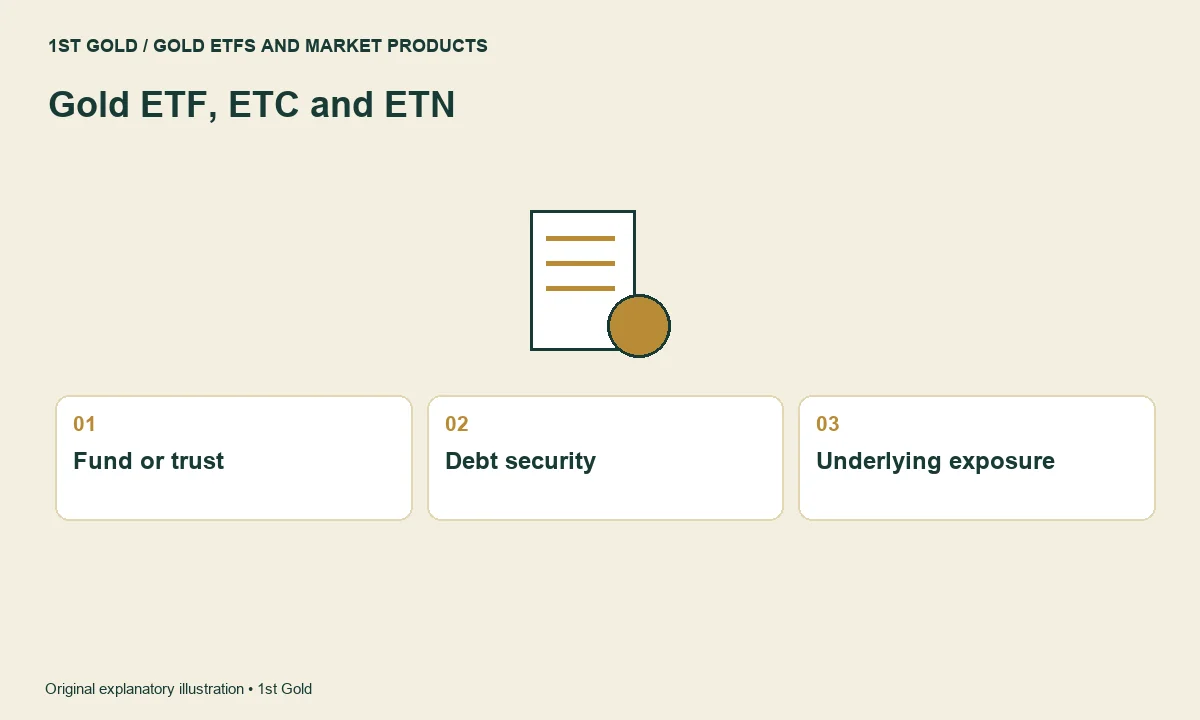
Identify the claim
Read the prospectus to establish what the product holds, who owes obligations and what rights a shareholder or noteholder has. A physically backed product, a futures-based strategy and a mining-share fund provide different exposures. Names and ticker symbols are not enough to settle the distinction.
Compare relevant risks
Look at custody, issuer obligations, expenses, collateral where applicable and redemption arrangements. Investor protections and tax treatment can vary by structure and jurisdiction. The SEC's Investor.gov materials distinguish several kinds of exchange-traded products; product-specific documents then explain the actual terms. Start with the legal form and holdings before comparing headline fees. This prevents a low expense figure from masking the fact that two products are designed to deliver different things.
Questions about gold ETF structure
Begin with the issuer's product documents and identify the legal form of the security. Record the issuer, any underlying assets and the parties responsible for custody or other services. Separate statements about the product's investment objective from statements about the rights attached to your shares or notes. A name suggesting gold exposure does not answer all of those questions.
Next, read how the product creates and redeems units, and which participants may use those processes. Check the stated treatment of costs, disruptions and termination. Keep a short summary with page references so another reader can trace each conclusion to the document. Comparing products in this way makes structural differences visible before fees and historical performance are placed side by side. It also helps prevent a trading label from being mistaken for a complete description of ownership.
Source and further reading
U.S. SEC Investor.gov: Exchange-Traded Products. Reference checked on 14 November 2026. The linked source supports the relevant definitions or background; illustrative calculations above are our own.