
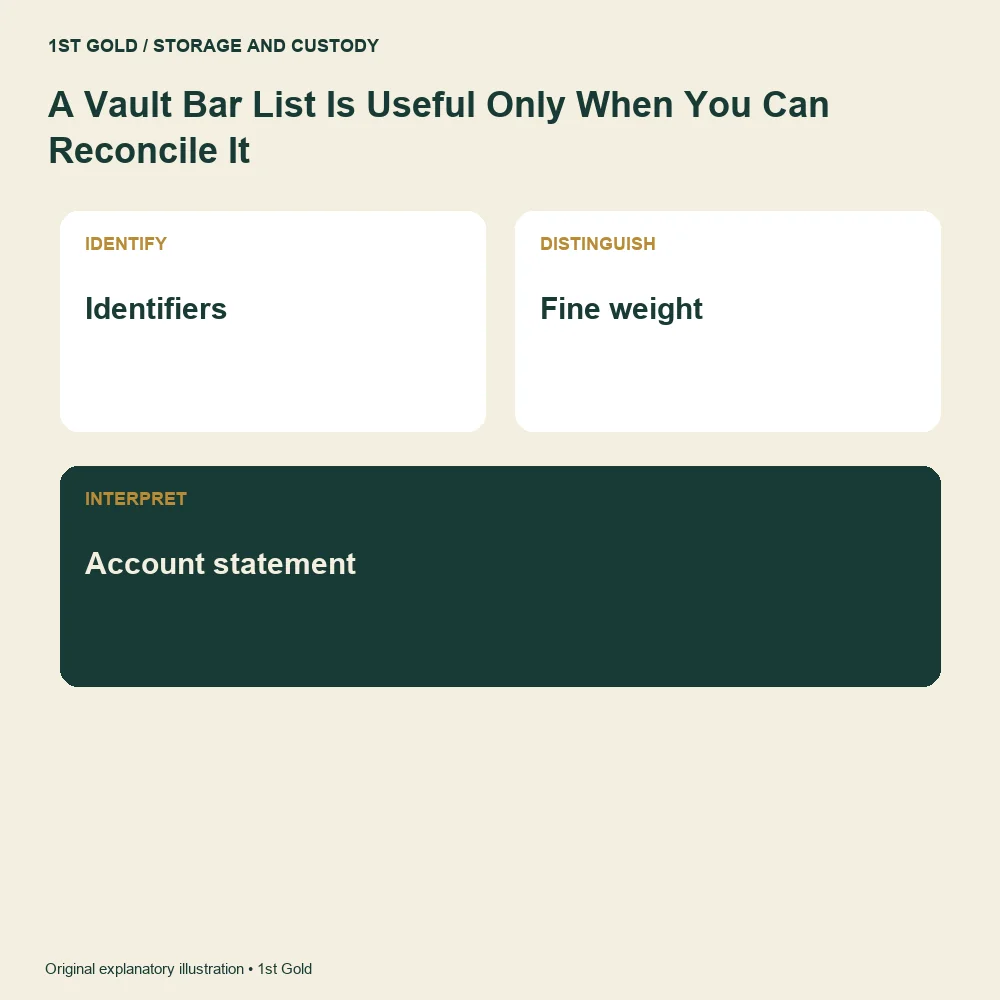
A bar list can identify the metal associated with a holding. Depending on the arrangement, it may include refiner, serial number, gross weight and fineness. Its usefulness depends on how clearly it connects to the customer's actual rights and account statement.
Check the arithmetic and identity
Compare units and the stated fine weight. Watch for duplicate identifiers, missing fields or unexplained substitutions. A serial number may need the refiner's name to identify a bar unambiguously. The presence of a list alone does not establish who has legal title.
Ask how updates work
Determine how often the list is reconciled, who performs independent checks and how changes are communicated. If you hold a share of a pooled service, ask how the total metal and customer liabilities are matched. An allocated arrangement and a pooled entitlement require different interpretation. Keep dated copies of statements so differences can be investigated. A bar list is strongest as part of a consistent evidence trail, alongside the custody agreement and appropriate independent assurance.
Source and further reading
LBMA: Precious Metal Accounts. Reference checked on 14 November 2026. The linked source supports the relevant definitions or background; illustrative calculations above are our own.