
Gold recycling statistics describe different stages of a material's journey. Before comparing totals or rates, identify whether the measure concerns collection, processing, recovered metal or supply returned to the market, and check its defined scope.
A recycling figure needs a definition before it can be interpreted. It may describe material collected, processed, recovered or returned to the market. Those stages can produce different quantities over the same period.
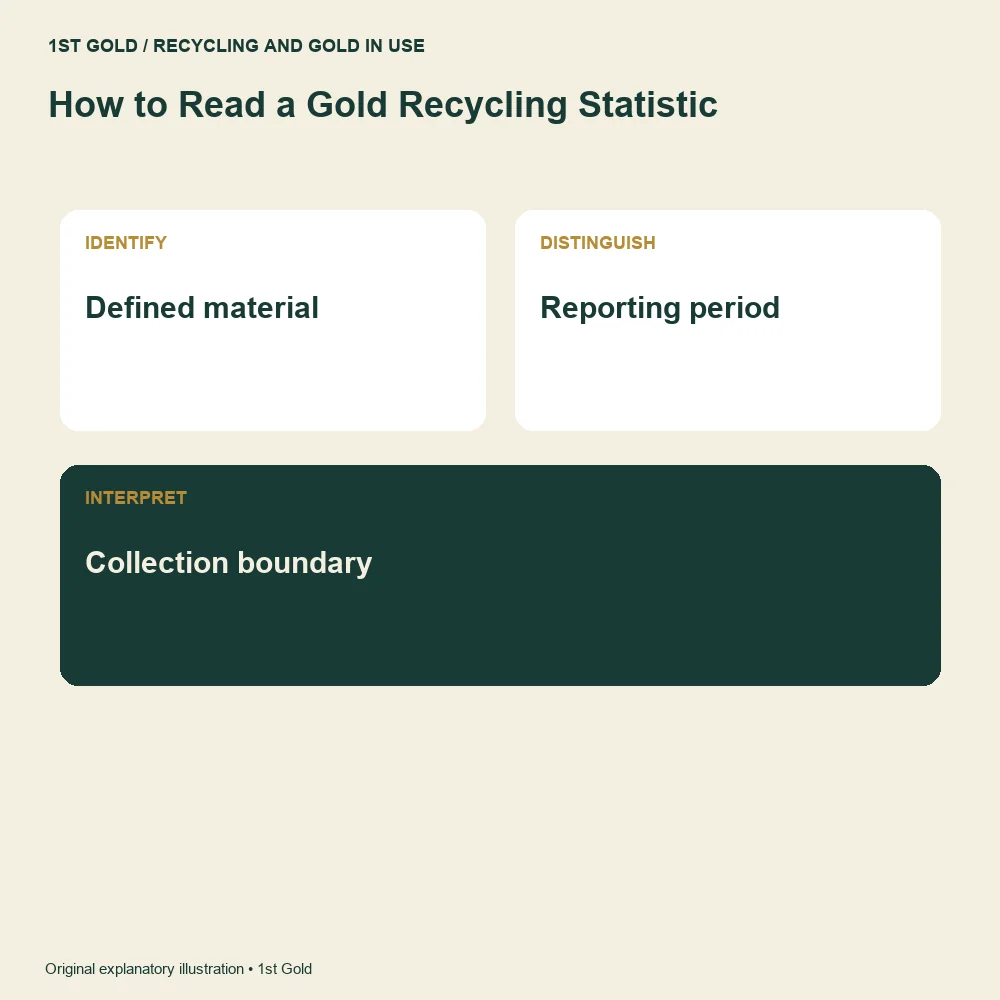
Follow the boundary
Check whether the figure includes jewellery, industrial scrap, manufacturing returns or electronic waste. Identify the geographic scope, unit and observation period. A recycling rate for one product stream should not be presented as the rate for all gold.
Avoid double counting
Material can pass through several businesses before refined metal is produced. Adding each business's throughput can count the same gold more than once. Likewise, a recovery percentage from a selected process is not the same as the share of all discarded products successfully collected. Keep collection, processing yield and final supply separate. A careful caption names the measure and source instead of using the broad word recycling to conceal several distinct questions about what was recovered and where it came from.
Comparing gold recycling statistics correctly
Draw a simple sequence from discarded product to collection, processing and recovered output. Place each reported figure at the stage it measures. A high recovery percentage within one processing step does not tell you how much discarded material entered that step in the first place. The denominator matters as much as the percentage itself.
Next, check whether two published totals overlap. Material handled by one business may later be included in another business's throughput. Adding those figures could count the same metal repeatedly. Keep geography, observation period and product type explicit in any table or chart. If the source changes its method between years, mark that break. A careful explanation states exactly what was measured and leaves broader conclusions proportionate to the evidence.