
Gold mine closure belongs in the assessment of the whole project, including the years after production ends. Read the practical commitments, cost estimates and responsibility arrangements together instead of treating closure as a distant footnote.
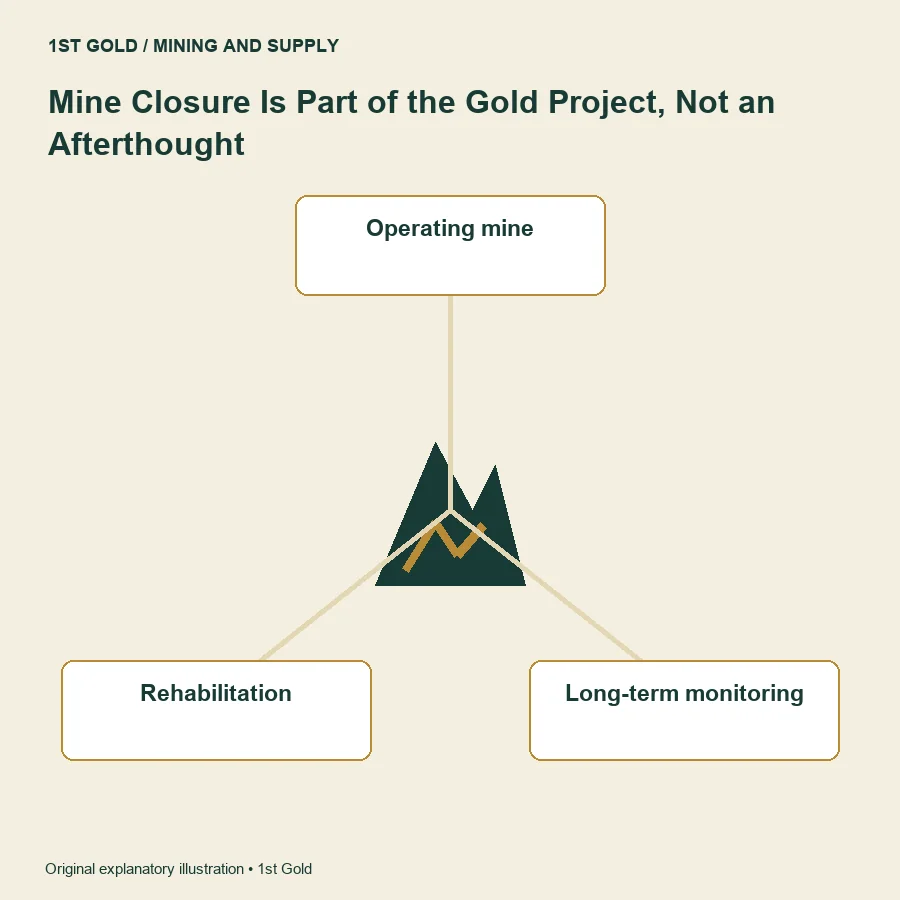
A mine's responsibilities continue after production stops. Closure planning can involve land rehabilitation, water management, infrastructure removal and monitoring, depending on the site and applicable requirements.
Look for the plan and funding
Read the project's closure commitments and financial provisions alongside its production forecast. A provision in financial statements and a practical, funded closure programme are related but not identical concepts. The amount needed can change as the mine develops and new information emerges.
Ask about the long term
Identify who remains responsible, how performance will be assessed and what happens if costs exceed estimates. Avoid judging a project only by ounces produced during its operating years. Closure obligations affect both environmental outcomes and project economics. A balanced account describes the entire lifecycle, including the period when the mine no longer earns revenue. This perspective makes it easier to evaluate claims that a project is responsibly managed rather than relying on a photograph of rehabilitated land alone.
Reading a gold mine closure commitment
Identify the actions the plan describes and the milestones used to assess completion. Separate work expected during operation from work planned after production stops. Check the date of the estimate and whether later changes in the mine plan have been reflected. A closure figure without its scope and assumptions is difficult to compare with a later estimate.
Then distinguish an accounting provision from the arrangements for paying for and carrying out the work. Ask which obligations are described, who remains responsible and what monitoring is expected. Do not infer the answer from one photograph of restored land. A useful project summary gives the operating period and the closure period appropriate attention, making clear which commitments are documented and which questions still need evidence.