
Recovered gold is the metal obtained from a processing route, while contained gold is the estimated amount in the material before that recovery step. A simple calculation makes the distinction clear and exposes the assumptions behind a production figure.
Contained gold is the amount estimated to be present in material. Recovered gold is the portion obtained through the processing route. The difference is central to understanding production estimates.
A hypothetical example
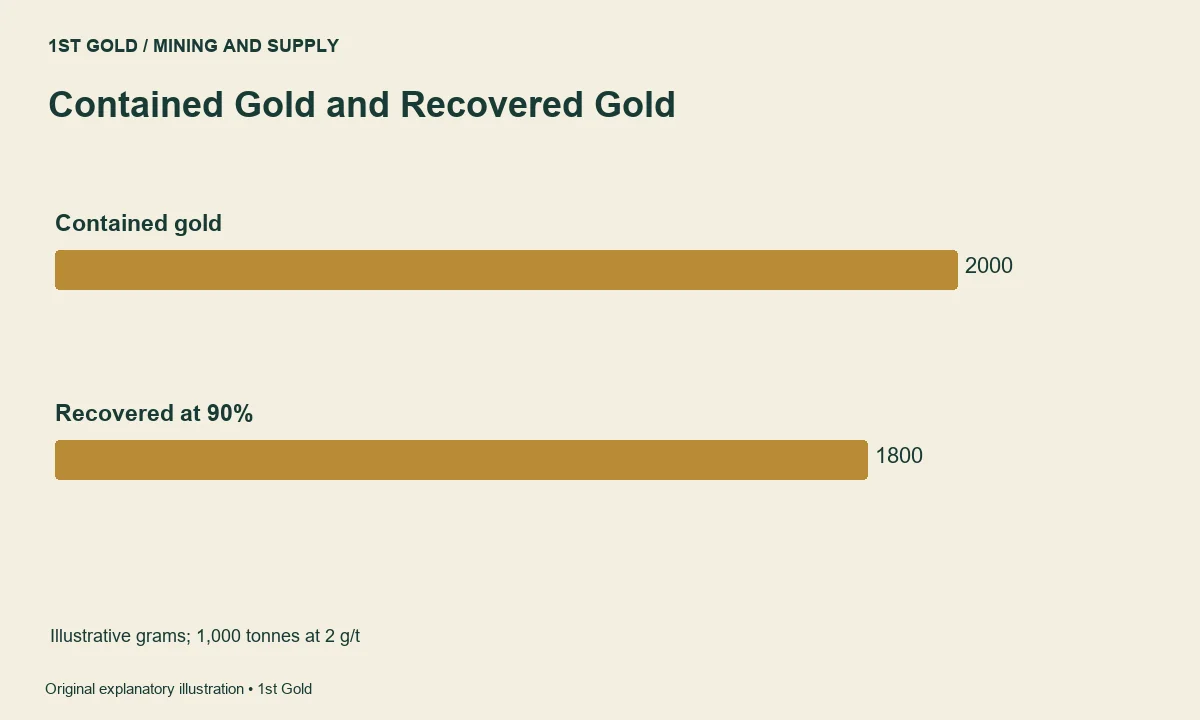
Suppose 1,000 tonnes of ore contain 2 grams of gold per tonne. The calculated contained gold is 2,000 grams. At an assumed recovery of 90%, the recovered amount would be 1,800 grams. These figures illustrate the calculation; they are not measurements from a mine.
Keep the assumptions visible
Actual recovery depends on mineralogy, processing conditions and other factors. A laboratory result may not translate directly into sustained operating performance. Also distinguish processed ore from total material moved, which can include waste. When comparing forecasts with production, check whether the same grade, tonnage and recovery definitions are used. Transparent arithmetic helps locate the source of a difference instead of treating every shortfall as an unexplained change in the gold deposit.
Checking a recovered gold calculation
Write the units beside each input before multiplying. Tonnes of ore multiplied by grams per tonne produce grams of contained gold; multiplying that amount by an assumed recovery fraction gives the illustrative recovered quantity. If the result is later expressed in troy ounces, show that conversion as a separate step. This makes it easier to locate an error in either the arithmetic or the units.
For a sensitivity check, change one assumption at a time. Keep tonnage and grade fixed while comparing two recovery percentages, then explain that the exercise is hypothetical. Do not treat a laboratory test or a planning assumption as a guarantee of sustained production. When comparing the model with a reported operating result, confirm that both use the same material, period and measurement definitions.