
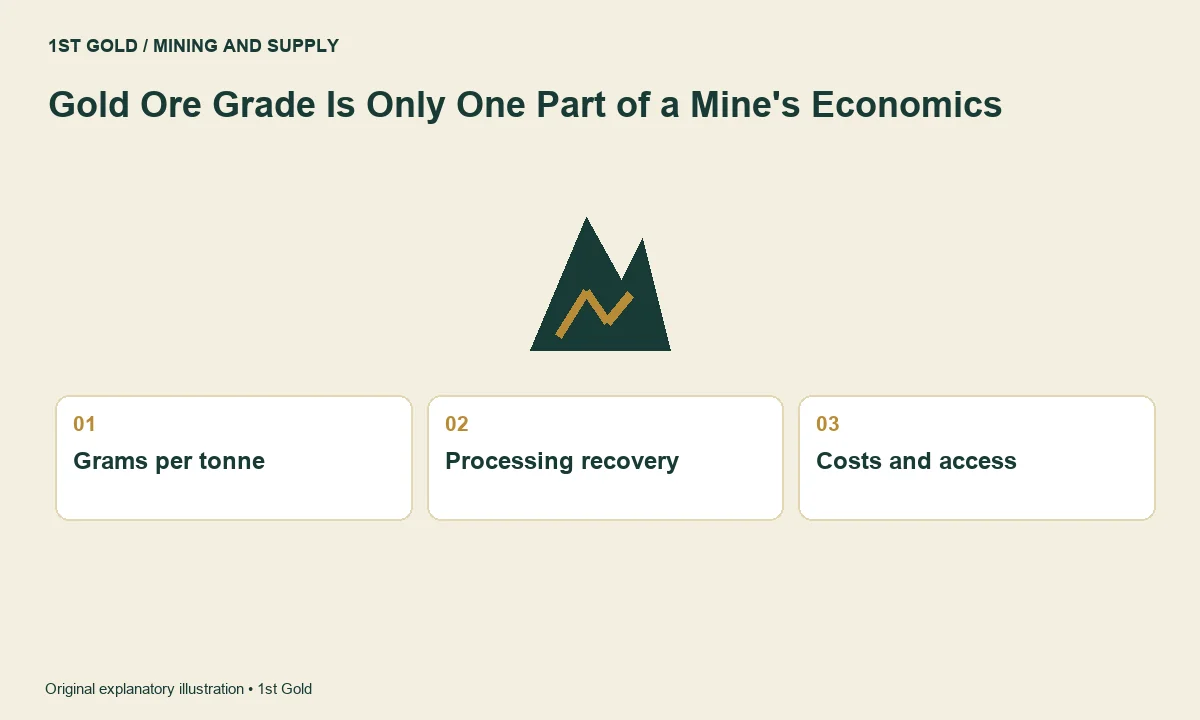
Ore grade describes the concentration of gold in material, often in grams per tonne. A higher grade can be valuable, but it does not by itself determine profitability. The deposit's depth, geometry, metallurgy and operating conditions also matter.
Follow the material
A mine must move and process material to recover gold. Some gold may not be recovered by the selected process. Waste movement, energy, water, labour and infrastructure can differ greatly between sites. Comparing grade alone ignores those differences.
Read the complete study
Look for the grade's context: a selected drill interval, an average resource grade or the expected grade of processed ore. These are not interchangeable. Check the reporting date and assumptions. A narrow, high-grade intersection should not be described as the average of an entire deposit. A useful project comparison combines geological evidence with recovery, scale, costs and practical constraints rather than ranking mines by the largest grade number in a headline.