
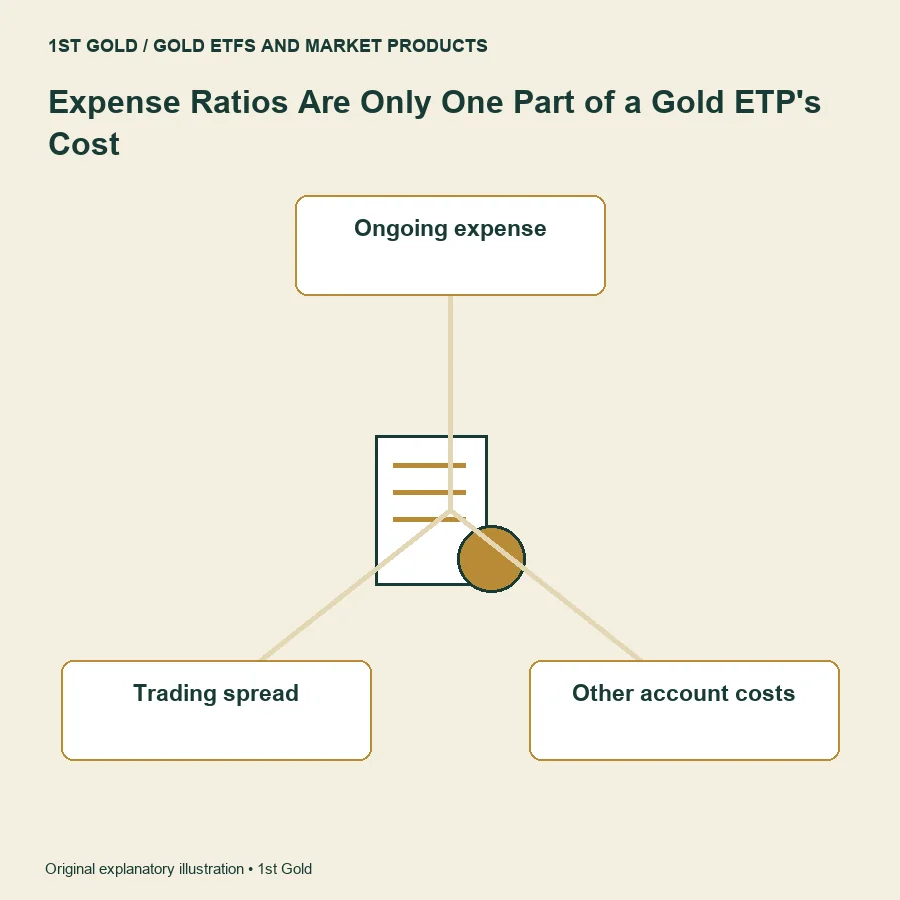
An ongoing expense ratio describes a recurring product-level cost. It does not necessarily include brokerage commissions, the bid–ask spread, currency-conversion charges or account fees paid by an investor.
Build a holding-period example
Separate costs incurred when entering and leaving from costs that accumulate over time. For a short holding period, a wide spread can matter more than a small difference in annual expenses. Over a longer period, recurring costs become more significant. Use hypothetical figures unless you have current, dated product data.
Compare equivalent exposure
Before ranking fees, confirm that the products have comparable structures, holdings and objectives. A cheap mining-share fund is not a direct substitute for a bullion-backed product. Check how expenses are paid and whether the metal entitlement per unit can decline as costs are met. Retain the latest fee document with its date. A complete comparison explains both the cost schedule and what exposure the investor receives in return.
Source and further reading
U.S. SEC Investor.gov: Characteristics of Mutual Funds and ETFs. Reference checked on 14 November 2026. The linked source supports the relevant definitions or background; illustrative calculations above are our own.