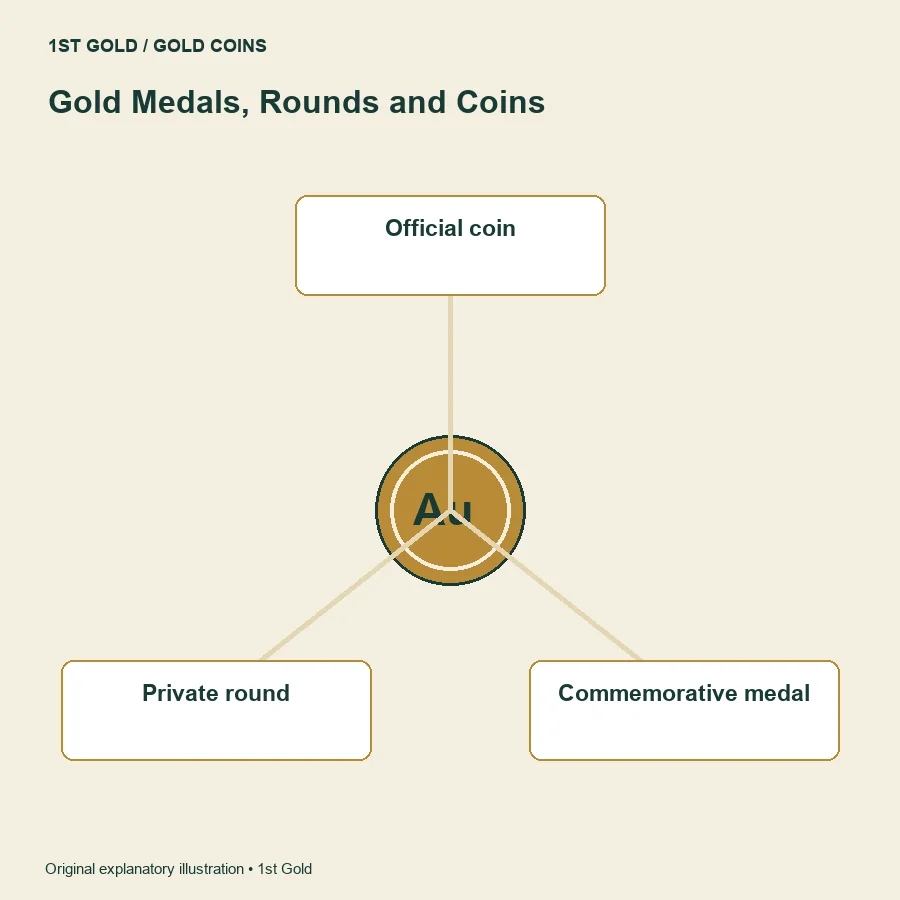
A round can resemble a coin without being an official currency issue. A medal may commemorate an event or person. These labels do not establish the gold content, and an official denomination does not by itself establish a low premium.
Verify metal and issuer
Look for a reliable specification of composition, weight and manufacturer. Expressions such as “gold tone”, “gold layered” or “gold plated” should not be treated as equivalent to solid gold. An attractive presentation case can add to the price without adding significant precious metal.
Match the resale market
A bullion buyer will usually want a verifiable gold content. A collector may also care about the issuer, design, history and condition. Establish which market supports the asking price. If there is no transparent specification or credible way to verify the object, its appearance is not enough. Comparing like products begins with identifying what the object is, who made it and how much fine gold it actually contains.
Source and further reading
The Royal Mint: Bullion Investing Jargon Buster — Round. Reference checked on 14 November 2026. The linked source supports the relevant definitions or background; illustrative calculations above are our own.