
Inherited gold coins need identification before valuation or sale. A careful inventory preserves the information that helps distinguish ordinary bullion, collectible issues, medals and objects whose gold content or identity is still uncertain.
An inherited collection can contain ordinary bullion, historical coins, medals and items with little or no gold. Treating everything as scrap risks overlooking collector value; assuming every old-looking object is rare creates a different mistake.
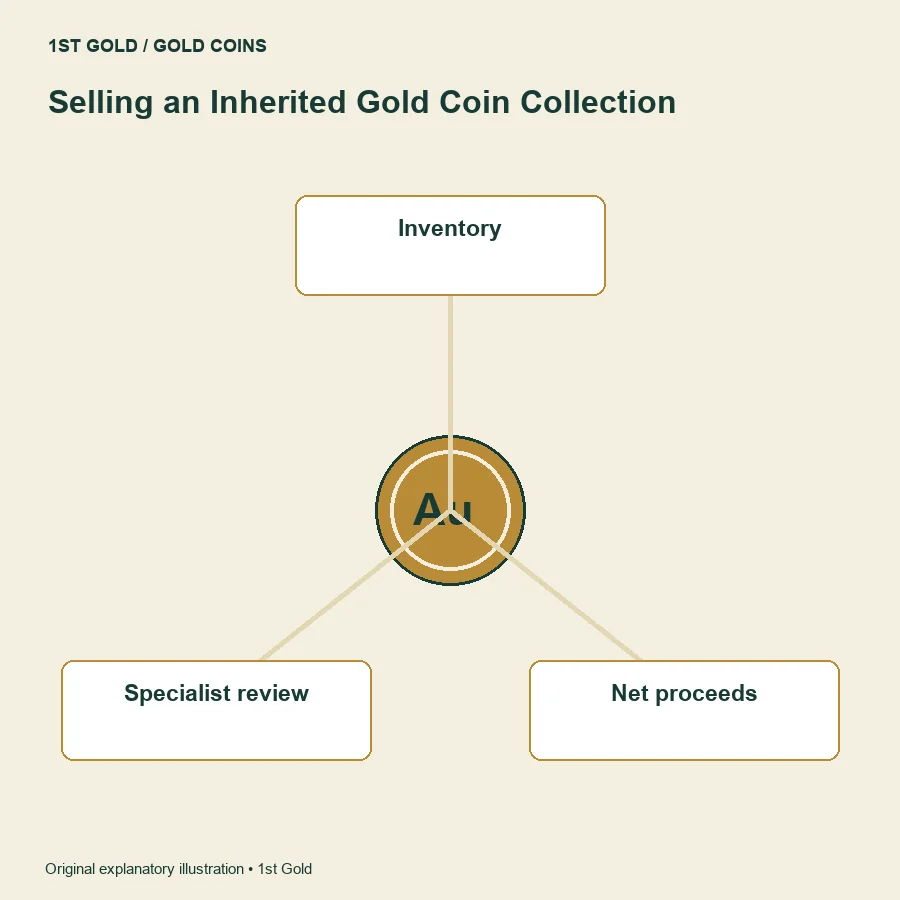
Make a non-destructive inventory
Photograph both sides and record visible inscriptions, dates and dimensions without cleaning the pieces. Retain envelopes, labels, receipts and certificates because they may help identify provenance. Keep uncertain descriptions marked as uncertain.
Obtain comparable assessments
Ask an appropriate specialist to separate metal value from potential collector value. For significant items, compare more than one route to sale and focus on net proceeds after fees. An auction estimate is not a guaranteed payment, and a dealer's offer may reflect the cost and time of resale. Do not feel obliged to sell during the first assessment. Identification comes first; valuation and choice of sales channel follow. This sequence preserves options while providing a clearer basis for any eventual decision.
Organising inherited gold coins for assessment
Assign a simple inventory number to each item or clearly identified group. Place that number on the accompanying record, not on the coin itself. Photograph both sides and associate existing envelopes or labels with the correct entry. If you cannot confidently identify an inscription or date, record what is visible and leave the interpretation open for the assessor.
When requesting offers, ask for itemised descriptions rather than one unexplained total for the collection. That makes it easier to see which pieces are valued mainly for metal and which may have collector interest. Keep the inventory intact even if you later sell the collection in several stages. A documented sequence of identification, assessment and sale provides a clearer record for everyone authorised to deal with the inherited property.