
A price notebook is useful when every entry describes the same kind of observation. Mixing retail offers, futures closes and indicative spot prices produces a table that looks orderly but cannot support a fair comparison.
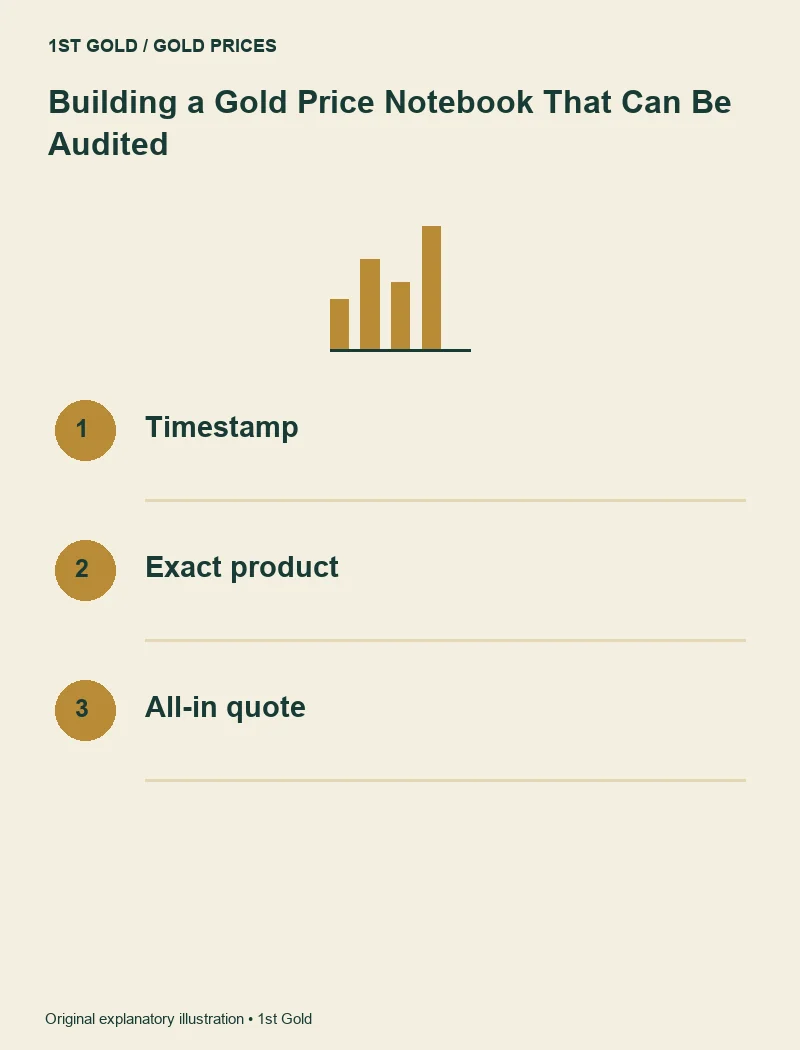
Define one row
Record the source URL, capture time and timezone, currency, unit, bid or ask, product, fine-gold content and quantity. Add separate columns for delivery, payment charges and any other known costs. Preserve the dealer's quotation or receipt when a transaction actually occurs.
Make changes explicit
If a source stops publishing or changes its benchmark, document the break instead of silently splicing the series. Keep raw observations separate from calculated premiums and currency conversions. Mark missing values as missing rather than carrying forward an old price without a label. This method is especially useful when revisiting a purchase months later: it explains why the invoice differed from a headline price and prevents a later exchange rate from being mistaken for the one available when the decision was made.
Source and further reading
LBMA: The Price. Reference checked on 14 November 2026. The linked source supports the relevant definitions or background; illustrative calculations above are our own.