
A premium measures how much a product costs above a chosen metal-value reference. It is only meaningful when both amounts use the same currency and fine-gold quantity. Shipping can either be included or shown separately, but the comparison must say which approach it uses.
A hypothetical calculation
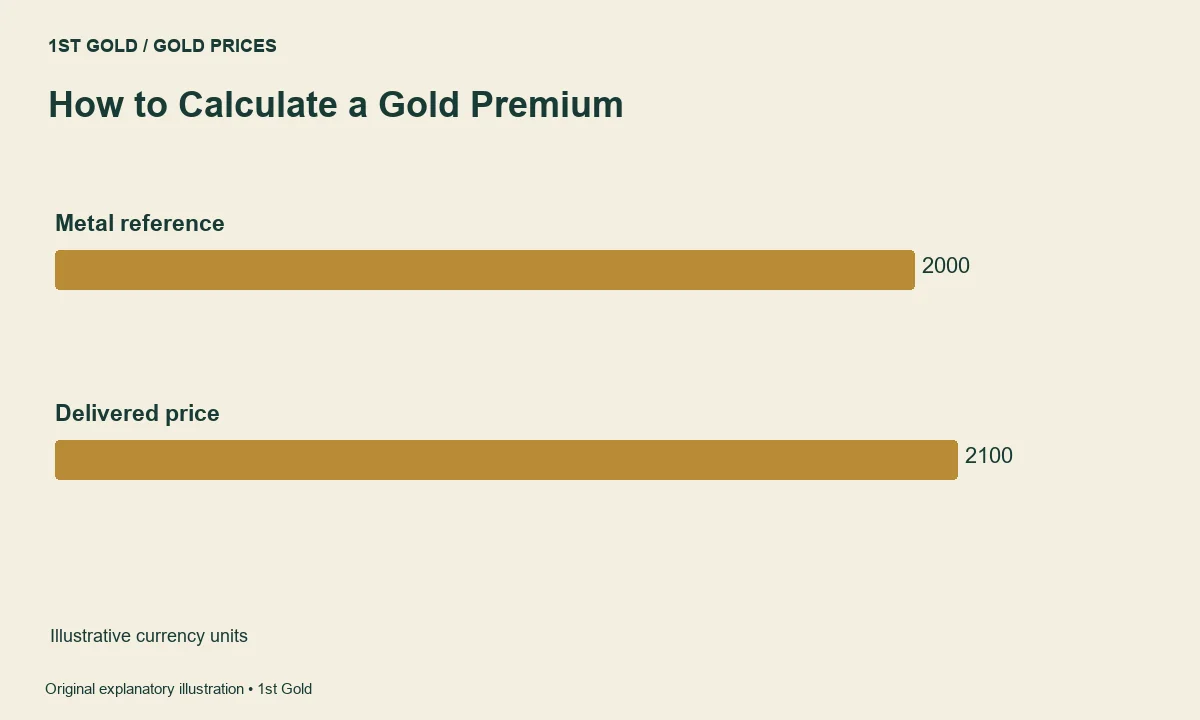
Suppose the metal reference for a bar is 2,000 units of currency and the delivered price is 2,100. The extra cost is 100. Divide 100 by 2,000 and multiply by 100: the premium is 5%. These are teaching figures, not a current gold quotation.
Why the percentage changes
A fixed manufacturing or shipping charge represents a larger percentage of a small purchase. Product shortages can also widen premiums independently of the gold price. To evaluate an offer, compare its premium with similar products and ask for a simultaneous buyback quote. Paying a high premium does not establish that a future buyer will reimburse it. Keep the original metal reference in your records so you can distinguish a change in gold value from a change in retail pricing.
Source and further reading
LBMA: The Price. Reference checked on 14 November 2026. The linked source supports the relevant definitions or background; illustrative calculations above are our own.